What Lunar New Year Traditions Teach Us About Hosting Executives in Asia

Author: Jovana Perosevic Date: October 2026

Lunar New Year, the Year of the Fire Goat, falls on Saturday, 6 February 2027. Mainland offices are expected to stay closed until around 14 February, subject to the official holiday announcement, and the festive period formally ends with the Lantern Festival on 20 February.

For anyone planning executive events in Asia, those dates matter. The weeks around the New Year are effectively blocked off, with the fortnight before the holiday heavily contested and the fortnight after slow to recover. Less obvious, and more useful, is that the traditions themselves contain a working theory of hospitality. The holiday has practices around hierarchy, gift-giving, and the value of a quiet, shared meal.

Those practices closely resemble the problems we handle at our roundtables. So we have laid out the market-specific traditions worth knowing for the upcoming Lunar New Year, and what each one contributes to designing a room.

One note before we begin. Several countries in the region observe the Lunar New Year without observing Lunar New Year. Vietnam’s Tết and Korea’s Seollal fall on the same date and share some ancient roots, but they are distinct regional adaptations of the holiday.
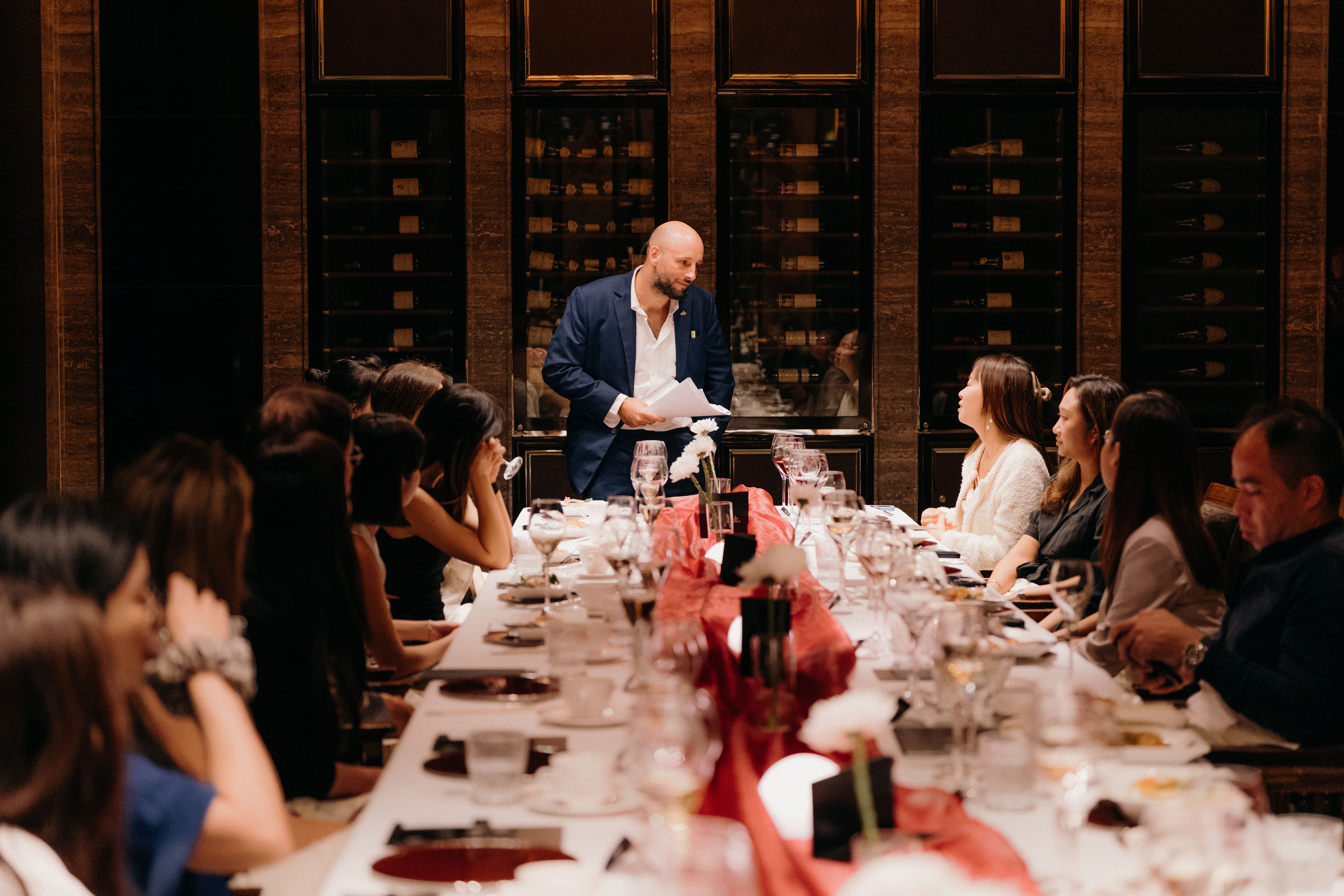
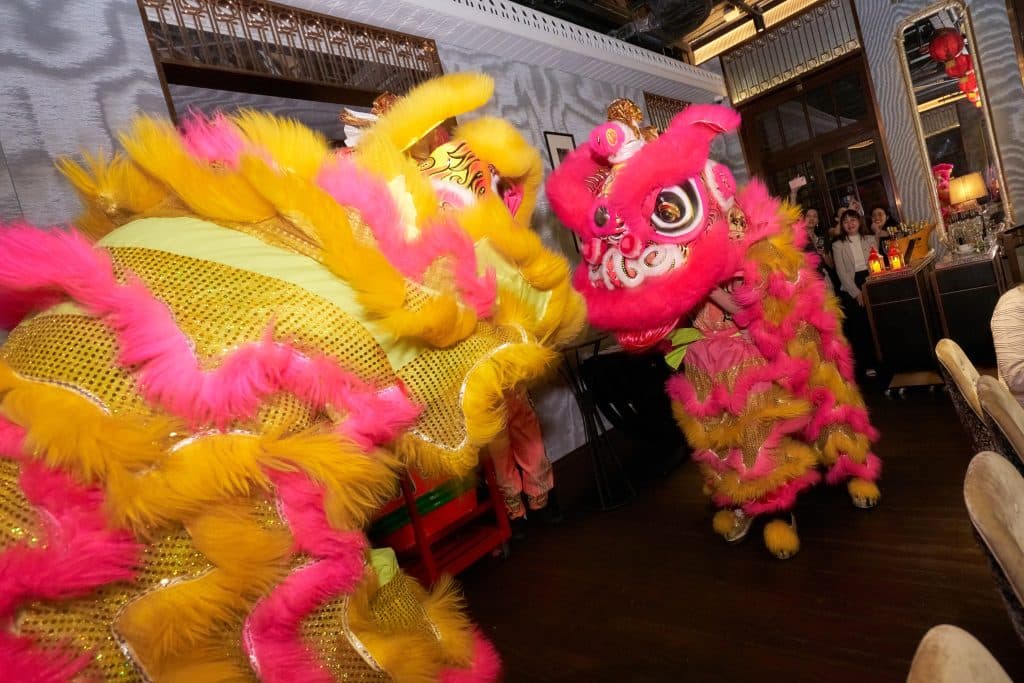
The Ortus Club Hong Kong - Lunar New Year

Mainland China: what the reunion dinner teaches about guest curation

In mainland China, the defining feature of the Lunar New Year is movement. Chunyun, the annual travel period around the holiday, is widely described as the largest regular human migration on earth. Huge numbers of people cross the country for a single meal.

That meal, the reunion dinner on New Year’s Eve, is the whole point. The cleaning and the couplets, along with the firecrackers, all serve the goal of getting the family to one table on one night.

What it says about executive events. People will travel far for a table that matters to them. In our experience, the deciding factor in whether a senior executive crosses a city at six in the evening is rarely the venue or the catering. It is whether they believe the people at that specific table are worth the journey.

The practical version is that effort spent on curation tends to return more than effort spent on logistics. A perfectly run dinner with the wrong eleven people is just another “nice evening.” A slightly rough dinner with the right eleven is one they will remember long afterwards.

How to use it in a discussion. The reunion dinner is a useful frame for a conversation about distributed teams. It invites the room to consider why the one annual in-person gathering carries so much more weight than the fifty video calls around it, and what that tells a C-level executive about where to spend a travel budget.

Hong Kong: what flower markets & the first incense teach about invitation timing

In the days before the New Year, Hong Kong fills with flower markets. Families buy kumquat trees and peach blossoms, and the buying is competitive. A good plant is a statement about the year ahead.

The other tradition worth knowing is the race to offer the first incense of the year at Che Kung or Wong Tai Sin. Being first carries meaning.

What it says about executive events. Both customs treat timing as a form of commitment. Buying the flowers early and arriving at the temple first both show the value of timeliness.

The same logic applies to invitations. When we send an invitation six weeks ahead with a goodie bag attached, the time is a gift as well as the bag. It tells the guest that they were on our mind weeks before the welcoming speech.

How to use it in a discussion. The flower markets trade heavily within a short window each year. For a room of commercial leaders, that is a good way into a conversation about seasonal demand and scarcity pricing, and about what happens when a business must earn a large share of its revenue in a few weeks.

Singapore and Malaysia: why yusheng works as an icebreaker

Yusheng, or lo hei, is a raw fish salad that diners toss into the air together with chopsticks while calling out auspicious phrases. The higher the toss, the better the year. Ingredients go in one at a time, each with its own saying, and everybody at the table participates.

What it says about executive events. It is a memorable icebreaker. Everyone gets a chance to chip in, so nobody is singled out. It is slightly undignified, which flattens the room faster than basic introductions. It makes a mess, which gives people something to laugh about, and it takes a few minutes at most.

In our experience, corporate icebreakers tend to fail because they ask people to perform individually in front of strangers. The toss asks them to do something mildly ridiculous as a group.

How to use it in a discussion. Yusheng is a seasonal custom, so it works best when the festive mood is already building. If you host in Singapore or Kuala Lumpur in January, the toss makes a strong opening, and it often does more for the first fifteen minutes than a standard icebreaker or intro speech. Once the holiday has passed, the custom loses its pull.

Malaysia: what the open house teaches about guest list diversity

The Malaysian open house is a custom where households welcome anyone. Friends, neighbours, colleagues and strangers are all invited, regardless of background or religion.

What it says about executive events. The open house is a picture of genuine hospitality. There is no guest list, only the unpredictability of who walks through the door and the certainty that they will be welcomed.

A corporate event cannot run that way, but it is worth considering the value of welcoming “outside” peers. Guest list curation buys relevance and costs diversity. A room designed to fit an exact description, with no variety in position or industry, loses the unexpected guest who could have changed the conversation.

Consider keeping a seat or two for wild cards from adjacent industries. It is a small concession to the open house principle inside a closed format.

How to use it in a discussion. The open house is a strong frame for any conversation about ecosystems and partner networks. It raises the question of when opening the door to people outside your category creates more value than defending the boundary.

Philippines: what tikoy and lion dances show about cultural marketing

In the Philippines, tikoy, the local sticky rice cake, is given far beyond the Chinese-Filipino community. The stickiness symbolises “togetherness,” and it’s easy to share with large groups and snack on. It arrives at offices from clients and neighbours with no connection to the holiday at all.

Another especially visible feature in the Philippines is commercial. Lion and dragon dance troupes are hired by malls and banks to herald the holiday season.

What it says about executive events. Tikoy travels because it’s a gesture of generosity, easy to share and easy to explain. The same test applies to event gifts: a gift the whole table can share, with a clear and warm meaning, builds more goodwill than an elaborate one that needs a winded explanation.

Paid performances remind us that commercial and cultural motives coexist comfortably in the region. There is no embarrassment about a bank hiring a lion dance. Marketers from outside the region sometimes worry over whether cultural participation is appropriate, and the local answer is often simpler than the worry suggests.

How to use it in a discussion. Binondo, in Manila, is recognised as the oldest Chinatown in the world. For a room of leaders in a city with that kind of commercial history, the longevity of a trading district is a natural way into a conversation about what makes a business outlast its founders.

Vietnam: what xông đất teaches about opening a roundtable

Tết has a custom called xông đất. The first person to enter a home in the New Year determines the household’s fortune for the year, so families choose that person deliberately. They look for someone with a good year behind them and a compatible zodiac sign. A poorly chosen first visitor is considered a real problem.

What it says about executive events. The first person to speak in a roundtable sets the tone for what follows. If the opening answer is cautious and corporate, the next six probably will be too. If it is candid, the room will follow suit.

We plan for this. Before the event starts, the moderator identifies who is most likely to open well and directs the opening question to that person. Nothing is left to chance, because a bad opening produces ninety minutes of polite nothing.

How to use it in a discussion. Tell the room about xông đất before you ask the opening question. It is a thirty-second story; it is charming, and it explains why the first answer matters.

Korea: what sebae teaches about handling seniority in the room

Seollal has sebae, a deep formal bow to elders, which is rewarded with money. It also has tteokguk, a rice cake soup eaten on the day. According to tradition, eating it is what makes you a year older, so the soup does the ageing.

What it says about executive events. Sebae is an explicit, physical enactment of seniority. The hierarchy is performed openly, and then it is over, and everyone eats.

Executive rooms have hierarchy too, and pretending otherwise does not remove it. A group CIO and a divisional head of engineering are not peers no matter how round the table is. What works is acknowledging seniority once, early and cleanly, and then setting it aside. In our experience, a short welcome that names the most senior guests, followed by a moderator who makes clear that the next ninety minutes are not ranked, does more than any amount of insisting that everyone is equal.

How to use it in a discussion. The tteokguk idea, that an action rather than a date marks the passage of a year, is a nice provocation for an end-of-year or start-of-year roundtable. It prompts leaders to name the thing their organisation does that actually marks the New Year, as opposed to the date the finance calendar sets.

What the Year of the Fire Goat means for 2027 roundtables

2027 is the Goat, also called the Sheep or Ram, the eighth animal in the twelve-year cycle. Specifically, it is the Year of the Fire Goat, which runs from 6 February 2027 to 25 January 2028.

The Goat has a reputation. Where the Horse is associated with speed and forward motion, the Goat is associated with gentleness, artistry, patience and collective harmony. Add fire, and the conventional reading is warmth and creativity.

Goat years have also been regarded with some ambivalence in parts of China. A persistent folk belief holds that Goat children have difficult fates, and the superstition is reported to have influenced births in some past Goat years as couples tried to avoid it.

We would not build a campaign on astrology, but the symbolic vocabulary is useful for two reasons.

It is a shared reference your guests already have. In Hong Kong, Singapore and Kuala Lumpur, many executives in the room will know what year it is in the zodiac. That saves you from explaining it at length and gives you a ready frame of reference.

It also gives you a topic hook that avoids the usual headlines. Q1 roundtable topics can feel repetitive, and a Goat year frame offers a different way into the discussion.

Some specific ways to use it:

  • After the Horse, the Goat. The Horse stands for speed and forward motion, and 2027 is positioned as a year of consolidation. That frames a question enterprise leaders are asking anyway: what to do with everything they deployed in a hurry.
  • The Goat’s collective instinct. The animal is associated with the herd rather than the individual. That is a usable opening for a conversation about shared governance or industry standards.
  • Fire as visibility. This is a reasonable frame for a marketing roundtable about brand presence in a year when budgets are under pressure.
  • The superstition. For a room of data or risk leaders, a folk belief that is reported to have shifted birth rates in some past Goat years is an interesting case study in how non-rational inputs shape very large datasets.

How to plan your APAC event calendar around Lunar New Year 2027

If you are building an APAC event calendar for early 2027, five dates matter:

  • 25 to 31 January: the last workable window for events in Greater China and Singapore, and a contested one.
  • 6 February: the holiday begins.
  • 14 February: the mainland is expected to remain effectively closed until around this date, subject to the official announcement.
  • 20 February: the Lantern Festival, on the fifteenth day, marks the formal end of the festive period.
  • Week of 22 February: normal business rhythm returns.

That leaves January crowded and February hollow. In our experience, the pre-holiday fortnight is among the most contested windows of the year for venues and for executive calendars in the region.

The better move, in most cases, is to avoid fighting for it. Run your January events early in the month, go quiet for the holiday, and come back in late February with a room that is rested rather than restless. The reunion dinner tradition exists because people need one night a year that is not about work, and scheduling against it is unlikely to end well.


SHARE POST


If you want to learn about how executives in the B2B space are influencing innovation and evolution, read more about it in The 2026 Event Marketer’s Playbook.