
HOST
Worldwide
REGION
3
EVENTS
IT
INDUSTRY
WORLDWIDE, June 2026 – TCS, in partnership with Google Cloud and The Ortus Club, convened Cloud, Data and AI leaders across three cities around one question: when does AI actually become the foundation of competitive strength, rather than just another tool to manage?
Past the Pilot Stage
As enterprises push AI from experimentation into embedded decision-making, the barrier is rarely the technology itself anymore. TCS and Google Cloud brought this tension to three of the region’s most senior Cloud, Data and AI audiences, asking each room to move past the promise of intelligent systems and into the harder work of making them operational, trusted and genuinely decisive.
Three Cities, One Premise
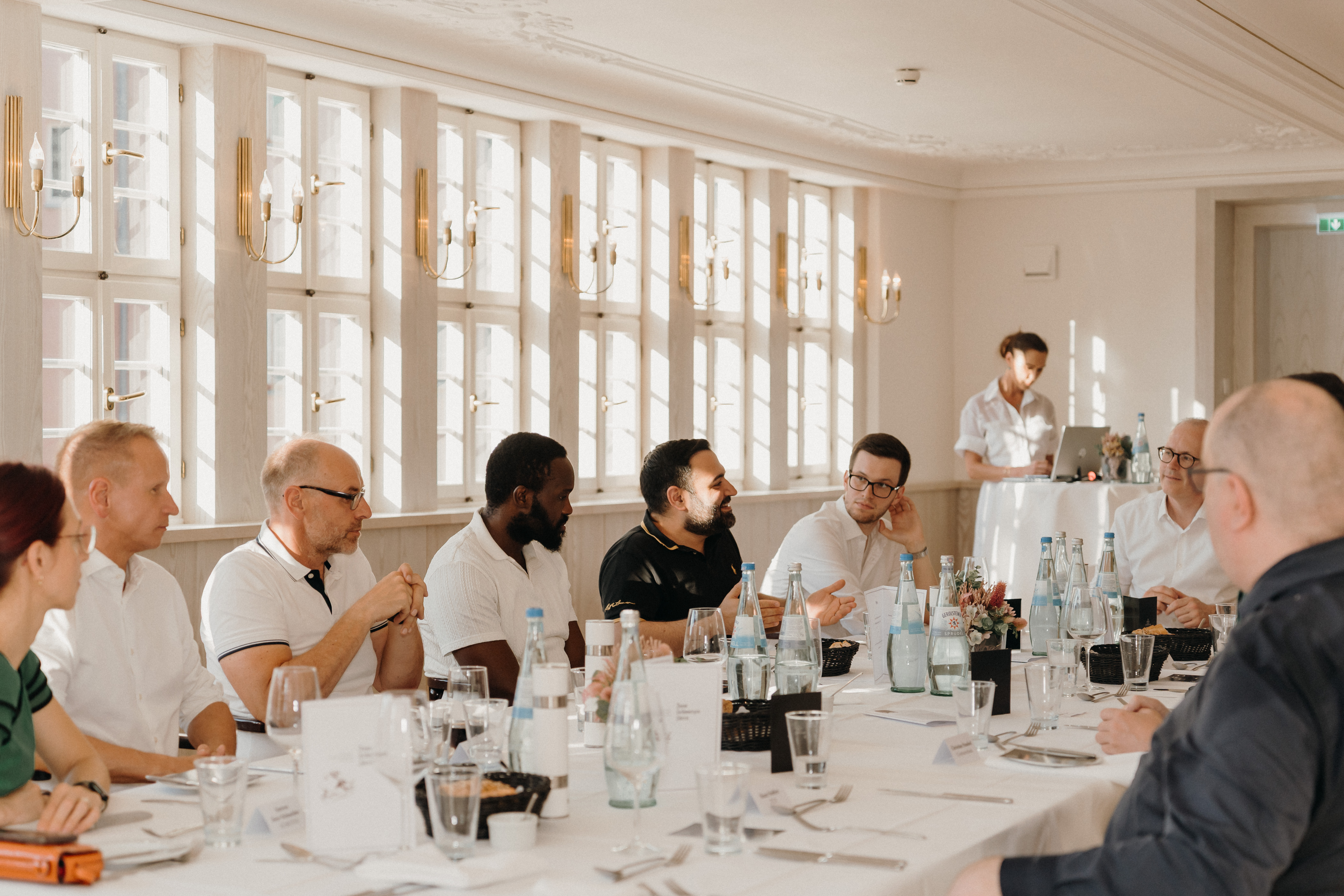
Three cities, three distinct settings, one continuous conversation. Zum Schwarzen Stern in Frankfurt set the tone with an intimate dinner built for candid exchange between competitors and peers. Emiliano Sao Paulo carried that same closed-door format across a three-course evening, giving senior Latin American leaders room to speak freely away from open-plan offices and conference sidelines. Henshin in Jakarta closed the series with a luncheon rather than a dinner, compressing the same depth of discussion into a sharper, midday format. Across all three, the setting did the same job: turning a room of accomplished, often competing leaders into a genuinely open table.
Interested to find out how the event was shaped and the work that went behind it?
Decision-Makers, Not Delegates
Across the three cities, the rooms were built around people with direct budget and strategic ownership over data, cloud and AI decisions at their organisations.
It’s the kind of guest list that reflects the seniority of the question being asked: not whether to adopt AI, but how to make it count.
From Data to Decision Advantage
Each session was framed around the same premise: enterprises today operate in an environment where disruption is constant and predictable advantage is increasingly rare. Intelligence is becoming the foundation of competitive strength, shaping how organisations design, operate and evolve, and data, AI and cloud are converging into a single enterprise fabric that most legacy systems were never built to support.
The conversation asked what it takes to modernise that fabric without breaking what already works, how AI moves from experimentation to embedded decision-making without becoming a liability, and how enterprises balance the speed needed to stay competitive with the governance needed to stay trusted.
Integration, Discipline, and the Real Gap
Foundations Over Frameworks
In Frankfurt, the discussion centred on the real barriers standing between enterprises and embedded AI decision-making. Legacy systems built for a world before real-time intelligence, and governance frameworks that slow everything down in the name of control, were named as the two forces enterprises spend the most energy fighting. The tension was consistent: move fast enough to stay competitive, carefully enough to stay trusted. The enterprises pulling ahead, the room agreed, are not the ones with the most advanced models. They are the ones that have done the harder work of building unified data, cloud-native infrastructure and clear accountability, the foundations that let AI operate at scale without becoming a liability.
The Gap Everyone Sees and Almost Nobody Has Closed
In Sao Paulo, the conversation sat right at the edge of where most enterprises are stuck. Everyone in the room agreed that data, AI and cloud should work as one connected system. Almost nobody had actually gotten there cleanly. The discussion worked through the real friction underneath that gap: modernising legacy systems without breaking what already works, moving AI from a side experiment into something embedded in actual decision-making, and doing all of it without losing control of governance along the way. The honest thread running through it was that the barrier is rarely the technology itself anymore. It is the integration, the discipline, and the willingness to rebuild the foundation instead of adding another layer on top of it.
Adoption Is Not the Same as Advantage
In Jakarta, most of the leaders at the table had already invested in AI. What they came to figure out was harder: what do the organisations pulling ahead know that the rest do not? The room kept circling back to an answer that was less about technology and more about discipline. The enterprises getting ahead are not the ones with the most advanced tools. They are the ones who have integrated data, AI and cloud into a single fabric without breaking what already works, and who have built enough trust and governance into the system to move fast without losing control. That distinction, between adopting AI and actually operationalising it, was the thing worth knowing, and by the end of the luncheon it was clear the room had left with a sharper sense of where that gap actually lives.
Adoption vs. Advantage
One Premise, Proven Across Three Markets
The Right Model
Running the same premise across a dinner in Frankfurt, a dinner in São Paulo, and a luncheon in Jakarta tested whether this conversation travels, and it did. Each session produced the same depth of debate and the same calibre of engagement, with guests in every city leaving early requests for a follow-up rather than a polite close.
The Right Calibre
From European banking and manufacturing through to Latin American retail, healthcare and financial services, and Southeast Asian banking, energy and telecommunications, every seat across the three cities belonged to a leader with direct ownership over data, cloud or AI strategy at their organisation.
The Right Fit
With TCS and Google Cloud’s own product and partnership sitting at the centre of the conversation, and an audience drawn from exactly the enterprises wrestling with the gap between AI adoption and AI advantage, the series demonstrated the kind of alignment that makes a roundtable worth repeating, city after city.
Want to host an event that connects top decision-makers and builds your brand’s reputation as a trusted leader?